Office Address
Siddique Tower (Level-2), House 45, Road-1, Block-A, Niketan, Dhaka-1212
Office Address
Siddique Tower (Level-2), House 45, Road-1, Block-A, Niketan, Dhaka-1212
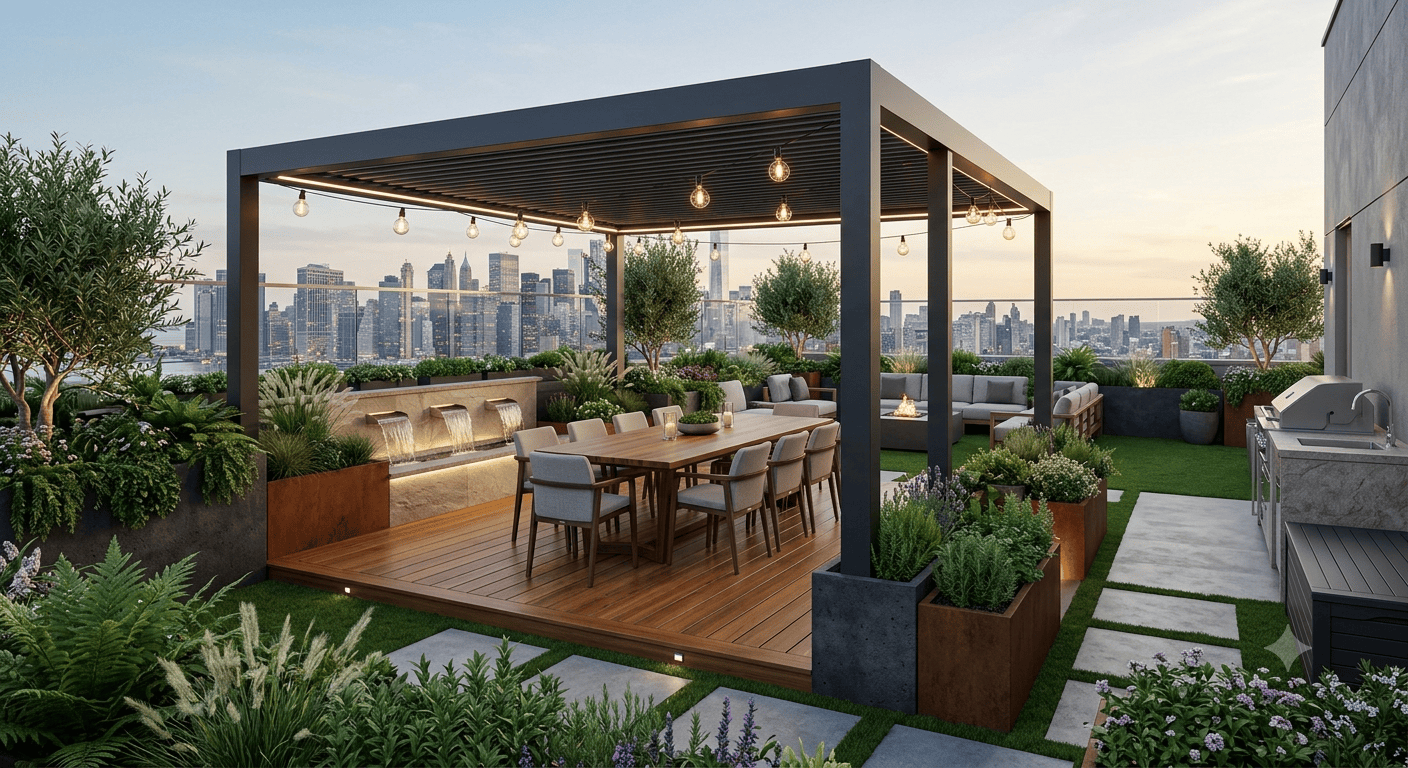
Opening a rooftop restaurant in Dhaka is more than choosing a view and setting up tables. Smart interior design can turn your space into a profit engine. Owners and investors often ask: “How can design boost revenue?” Here’s the answer—design is not just about looks. The right choices affect seating capacity, all-weather use, customer comfort, and viral exposure. Each of these drives turnover per seat and increases daily footfall.
This guide gives you practical, ROI-focused insights for rooftop restaurant interiors in Dhaka. We tackle what others miss: structural load, monsoon drainage, and how design choices tie directly to your bottom line. If you’re planning a rooftop restaurant or upgrading one, this article will help you make revenue-smart decisions.
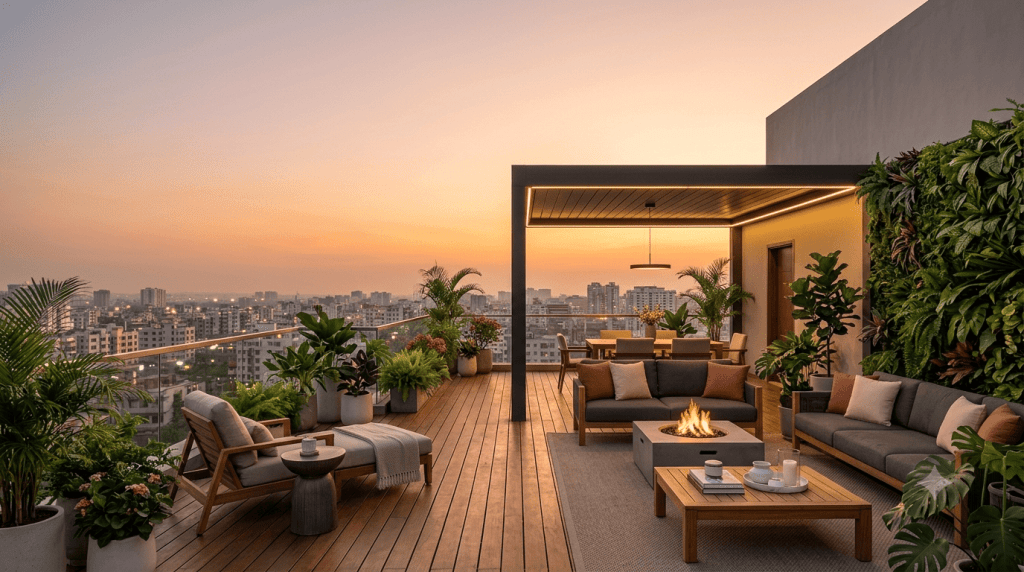
Every square foot is valuable in Dhaka. Rooftop restaurants must maximize turnover per seat and keep the venue busy throughout the day and in every season. Interior design affects:
For example, a well-designed 120-seat rooftop can earn up to 15% more per square foot compared to a poorly planned one. Dhaka’s climate and urban density make these gains even more critical.
Think of it this way: The difference between a packed weekday night and a half-empty one often comes down to how comfortable and inviting your space feels. For instance, if your tables are cramped or the space feels too hot in the afternoon, guests won’t linger or recommend your restaurant. On the other hand, a well-designed area can encourage longer stays, higher average bills, and more return visits. Adding features like shade sails or mist fans for summer can also extend usable hours, meaning you attract customers not just in the evening, but at brunch and lunch as well.
Turnover per seat is the revenue generated by each seat, per hour or day. If your rooftop seats 100 people and you serve two lunch shifts and three dinner shifts, you could reach up to 500 covers per day. With an average spend of BDT 600 per person, that’s BDT 300,000 daily.
Efficient design makes it possible to fill every seat, maximize comfort, and keep guests coming back.
But what owners often miss is the value of fast, efficient table resets. If your design allows staff to clear and reset tables quickly—through the right table size, floor plan, and storage for cleaning tools—you can increase total covers without any extra marketing.
For example, using wipeable surfaces and stackable chairs can shave minutes off each reset, boosting your seat turnover during peak hours.
Another non-obvious detail: sound design. Rooftop restaurants with poor acoustics can get noisy, making guests cut their stay short. Using acoustic panels, outdoor rugs, or planters can help control sound, making the environment more pleasant and increasing the chance that customers order more, stay longer, or visit again.
Most designers talk about lighting and greenery, but few address the core issues for rooftop restaurants in Dhaka—structural load and monsoon drainage. Ignoring these can lead to costly mistakes and safety risks.
Dhaka’s rooftops vary in strength. Before adding heavy furniture, water features, or large crowds, check the building’s load rating. Many older buildings support only 150-200 kg/sqm. Modern buildings often handle 350 kg/sqm or more.
Here’s a quick comparison:
| Building Age | Typical Load Capacity (kg/sqm) | Design Implications |
|---|---|---|
| Pre-2000 | 150–200 | Light furniture, fewer seats, no heavy features |
| 2000–2015 | 250–300 | Medium furniture, moderate seating |
| Post-2015 | 350–400 | Flexible seating, heavy decor, water features possible |
Never skip a structural review. You may need to reinforce the slab or adjust your seating plan. Overloading can cause cracks, leaks, or worse.
It’s also wise to consider the long-term effects of weather on structural elements. Over time, water can seep into concrete, weakening the structure. Using waterproof coatings and regularly inspecting for cracks can prevent costly repairs and extend the life of your rooftop investment.
Dhaka’s monsoon season lasts from June to September. Heavy rain can shut your rooftop for days unless you plan for drainage.
Key steps:
A rooftop that stays open during rain can increase annual revenue by up to 25%. All-weather design means more bookings, fewer cancellations, and stronger customer loyalty.
Also, consider installing temporary or retractable covers that can be deployed quickly during a sudden downpour. Investing in high-quality drainage grates that are easy to clean will further reduce maintenance headaches.
Solving these issues early saves money and prevents downtime.
Many owners forget to plan for emergency water removal. A simple backup, like portable pumps or extra drainage routes, can protect your business during extreme weather. Also, always secure loose items—like umbrellas or light chairs—since wind gusts can turn them into hazards.
Once the basics are covered, focus on elements that drive both aesthetics and revenue. These features are proven to attract customers in Dhaka’s market.
Dhaka’s customer base is diverse—families, couples, business groups, and young crowds. Flexible seating helps you serve all segments.
A flexible layout lets you host events, parties, and regular dining—all with the same space.
If you plan to host live music or pop-up events, use stackable or foldable furniture to clear space quickly. Consider built-in benches along walls or parapets; these are sturdy, reduce the number of loose items, and provide extra storage underneath for cushions or tablecloths.
Lighting is a revenue driver, not just decoration. The right setup makes the rooftop usable from brunch to midnight.
Smart lighting increases table turnover and keeps guests comfortable, reducing early departures.
Don’t forget emergency and pathway lighting. Well-lit walkways prevent accidents—especially during rain or at night—and reduce legal risks. Solar-powered lights can cut energy costs and keep the ambiance eco-friendly, which is a growing attraction for many Dhaka diners.
Adding plants is popular, but not all greenery survives Dhaka’s heat and rain. Choose durable, low-maintenance plants.
Plants improve air quality, reduce noise, and create privacy. They also boost photo appeal, bringing in more social media shares.
Tip: Use raised planters or vertical gardens to add green without taking up valuable floor space. Drip irrigation systems are easy to install and save water, making plant care less labor-intensive for your staff.
Efficient layouts reduce staff time and increase customer satisfaction.
A good flow means faster service, higher turnover, and happier customers.
Don’t overlook access for delivery or event setups. If you plan to host private parties or live events, include a discreet service entrance or a small lift for moving equipment and supplies—this keeps the guest area calm and professional.
Dhaka’s weather is harsh—intense sun, rain, humidity, and dust. Materials must be tough and easy to maintain.
| Material | Benefits | Drawbacks |
|---|---|---|
| Powder-coated steel | Resists rust and fading | Can get hot in sun |
| Teak wood | Durable, rich look | Needs regular oiling |
| High-density polycarbonate | Weather-proof, lightweight | Less premium feel |
| Porcelain tiles | Slip-resistant, easy to clean | Heavy, needs slab check |
Investing in the right materials lowers maintenance costs and keeps your rooftop safe and beautiful. For a deeper dive into pricing and durability, check the Interior Design Cost in Dhaka guide.
In addition, choose UV-resistant fabrics for cushions and canopies. These won’t fade or tear quickly under Dhaka’s sun. For flooring, interlocking deck tiles are popular—they can be replaced individually if damaged, saving long-term costs. Also, never use untreated softwoods outdoors; they soak up water and rot fast.
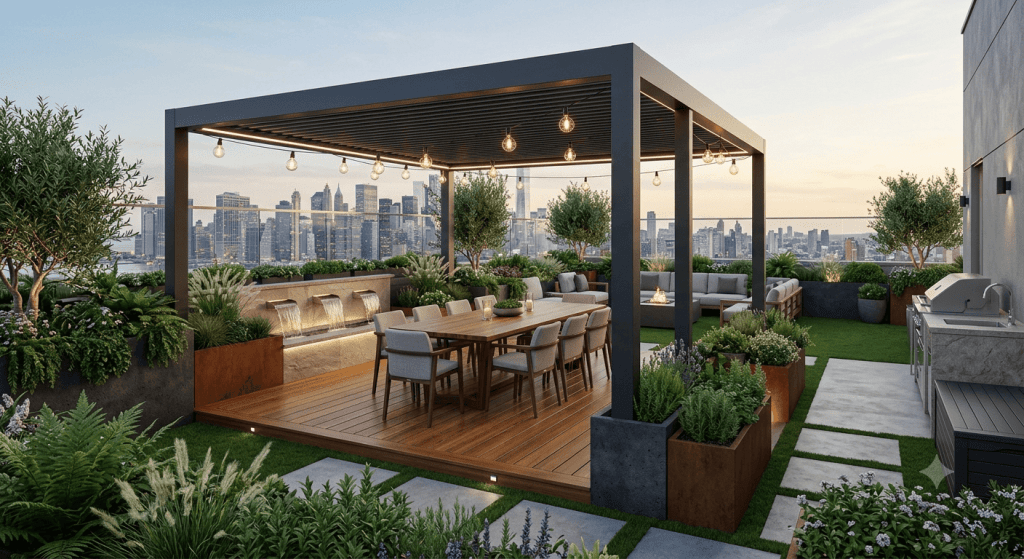
Social media drives footfall in Dhaka. Many customers discover rooftops through Instagram and Facebook. But “Instagrammable” must also mean practical.
A clever trick is to design photo spots that double as waiting areas or entry features. For example, a stylish bench with a greenery wall behind it can serve both as a photo zone and a comfortable waiting area for guests during busy times.
Lighting can be automated to switch between “dining mode” and “photo mode” at different times of day. This way, you keep the space practical for eating and attractive for social sharing.
Functional design keeps the space usable and safe, even when customers take photos. A balance of style and practicality increases shares and bookings.
Consider color psychology: soft pastels and warm neutrals often photograph best and appeal to a wide range of customers. Avoid all-white spaces—while they look clean, they can feel stark and are hard to keep spotless in a busy restaurant.
Some of the most successful rooftop restaurants use these strategies:
These venues prove that design choices impact revenue directly.
If you visit these places, you’ll notice how every design element—from the height of the tables to the placement of decorative items—feels intentional. They create not just pretty pictures, but smooth, enjoyable experiences.
Budgeting for a rooftop restaurant is challenging. Costs depend on materials, labor, structural upgrades, and weatherproofing. Smart budgeting means higher ROI.
Many owners underestimate the cost of repairs after monsoon or sun damage. Investing upfront saves money over years. To compare costs and plan your budget, see the Interior Design Cost in Dhaka guide.
Don’t forget hidden costs: permits, fire safety upgrades, and staff training for the new layout. Also, budgeting a small amount for seasonal redecorating can give you a fresh look for festivals or holidays, keeping regulars engaged and attracting new guests.
A smart approach is to phase your investment. Start with essentials—structural checks, basic furniture, drainage—then add decorative and tech elements as revenue grows. This way, you avoid cash flow problems and can adapt your design to what works best in the first months of operation.
Ready to unlock the full revenue potential of your rooftop restaurant in Dhaka? Our team at Unique Interior & Design specializes in restaurant interior design that combines safety, style, and ROI. We handle structural checks, drainage planning, and Instagrammable layouts—so your space earns more in every season. If you want expert guidance or a custom design plan, contact us today and transform your rooftop into Dhaka’s next top destination.

Sarwar Hossain is an interior design professional with 15+ years of experience and the founder of Unique Interior BD, which has completed 350+ interior and fit-out projects across Bangladesh since 2015. He is the Vice President of the Bangladesh Interior Companies Association, a General Member of the Entrepreneurs Club, and winner of the South Asian Business Excellence Awards 2025.