Office Address
Siddique Tower (Level-2), House 45, Road-1, Block-A, Niketan, Dhaka-1212
Office Address
Siddique Tower (Level-2), House 45, Road-1, Block-A, Niketan, Dhaka-1212
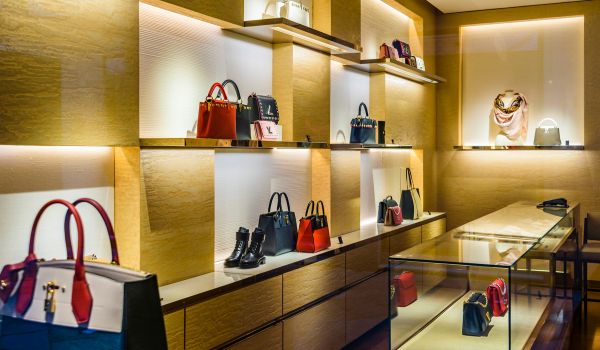
The first 10 feet inside your showroom can make or break a sale. In Bangladesh, where street life is loud and busy, those first steps inside set the customer’s mood. If the entrance feels cramped, confusing, or unwelcoming, visitors often leave within seconds. But a well-designed showroom interior can hold their attention, guide their journey, and boost sales—sometimes by 30% or more. This article explains how to design a showroom that works for your products, customers, and business goals. It’s based on real retail psychology, proven math for space planning, and the unique needs of the Bangladeshi market.
When a customer leaves the busy street and enters your showroom, their mind needs a moment to adjust. This area is called the decompression zone. In Bangladesh, it’s even more important because of the city’s noise and crowd density. Shoppers need to feel safe, comfortable, and ready to browse.
Studies show that the first 10 feet set the tone for the entire visit. If this area is cluttered or overwhelming, customers feel lost. If it’s open and welcoming, people relax and stay longer.
Key tips for your decompression zone:
Most shoppers in Bangladesh naturally turn right after entering. Place new arrivals or high-margin products just to the right of the entrance. This increases the chance they’ll see and consider these items.
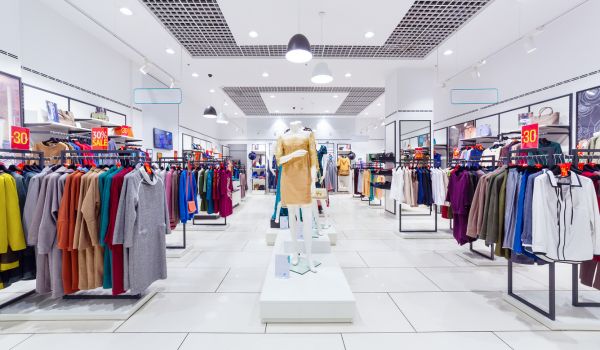
Every product category needs a different layout. The right plan helps customers explore, not get lost. Here are the main types used in Bangladesh, with real examples and pros/cons for each.
A grid layout uses straight aisles and rows. It works best for showrooms with many small items, like electronics, cosmetics, or mobile accessories. Customers can see everything, but the path is predictable.
Benefits:
Drawbacks:
Best for: Supermarkets, electronics, and stores with high product variety.
The loop layout creates a circular path around the store. Customers are guided from entrance to exit, passing all main sections. This is popular for furniture showrooms, home decor, and fashion stores.
Benefits:
Drawbacks:
Best for: Large showrooms, fashion, and home improvement.
A free-flow layout gives more creative freedom. Displays are arranged at angles, with wide paths and varied heights. Customers can explore as they wish. This style feels modern and works well for luxury goods, jewelry, or boutique brands.
Benefits:
Drawbacks:
Best for: High-end fashion, luxury, art galleries, and specialty goods.
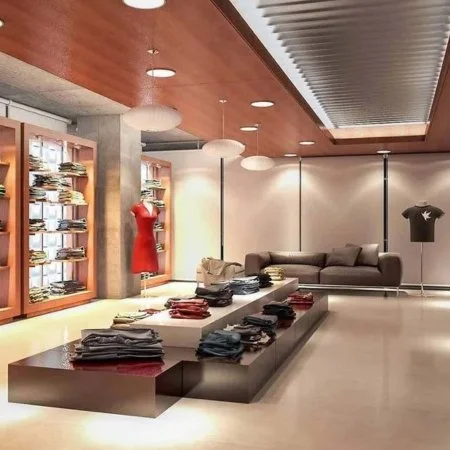
Showroom success depends on smart space planning. Overcrowding turns people away, while too much empty space wastes rent. Here’s how to get the math right:
Let’s see how this looks in practice:
| Product Type | Avg. Display Size (sq ft) | Circulation (%) | Total Space Needed per Product (sq ft) |
|---|---|---|---|
| Mobile Phones | 3 | 30% | 3.9 |
| Clothing (Hanging) | 4 | 35% | 5.4 |
| Sofa Sets | 12 | 40% | 16.8 |
| Jewelry (Counter) | 2 | 30% | 2.6 |
How to use this math:
If you want to display 50 mobile phones, you need about 200 sq ft (3. 9 x 50 = 195). For 10 sofa sets, you’ll need about 170 sq ft. Always add extra space near the entrance and checkout.
Your decompression zone should be at least 8-10 feet deep and span the width of your main entrance. This prevents crowding and gives a calming first impression.
Common mistake: Many Bangladeshi showrooms use this area for promotions or stacking new arrivals. This confuses customers and pushes them away.
Guiding customers through the showroom is both art and science. A good path increases sales and prevents bottlenecks.
Practical steps:
Non-obvious insight: Many showrooms in Dhaka forget seating areas. Adding a small bench or lounge lets families rest. This increases the time people spend in your store—and often boosts sales.
Lighting does more than just brighten a room—it creates mood, highlights products, and keeps customers engaged. In Bangladesh, where power cuts are common, reliable lighting is a must.
Key principles:
Bad lighting makes colors look dull and products less appealing. Too-bright or too-dim spaces confuse shoppers. The right lighting can increase time spent in-store by up to 20%.
Practical example:
If you sell jewelry, use warm white LEDs and targeted spotlights. For clothing, daylight LEDs show true fabric colors.
For a deep dive, see our Retail Lighting Guide.
| Area | Lighting Type | Purpose |
|---|---|---|
| Entrance | Ambient + Accent | Welcoming, highlights brand |
| Main Aisles | Ambient | General visibility |
| Product Displays | Accent | Draw attention, create focus |
| Checkout | Task | Clear view for transactions |
Non-obvious insight: Lighting should change slightly during the day. Morning shoppers prefer brighter light, while evening requires warmer tones.
Bangladesh’s humid climate and heavy foot traffic mean your showroom materials must be tough and easy to clean. Cheap finishes wear out fast, creating a bad impression and higher costs.
What to look for:
Practical tip: Check slip resistance for floors, especially in rainy months.
For more, see our detailed Materials Guide.
| Material | Cost (per sq ft) | Durability | Best For |
|---|---|---|---|
| Vitrified Tiles | ৳120-৳180 | High | Flooring |
| Quartz Countertop | ৳350-৳550 | Very High | Counters |
| Powder-coated Steel | ৳200-৳320 | High | Racks, Frames |
| SPC Flooring | ৳180-৳260 | Very High | Flooring |
Common mistake: Some showrooms use cheap laminates or MDF boards. These swell, chip, and fade fast in the Bangladeshi climate.
A well-designed showroom is more than shelves and lights. It tells your brand story and makes shopping memorable. In Bangladesh, shoppers love strong visuals—colors, local art, and digital screens can all help.
Tips for strong visual merchandising:
Example:
A clothing showroom can use bright wall murals inspired by Bengali culture near the fitting rooms. Electronics stores may use digital screens to show product demos.
Non-obvious insight: Scent matters too. A subtle, clean fragrance (not too strong) can increase time spent in the store.
Good design must be safe and welcoming to everyone, including seniors and people with disabilities.
Checklist:
Practical tip: Use bright, clear signage in both English and Bangla. This helps all customers feel included.
Digital tools can boost sales and track customer behavior.
Examples:
Non-obvious insight: Use customer flow data (from cameras or heat maps) to adjust your layout. Move popular products to quieter zones to balance the crowd.
Some errors waste money and hurt sales. Here are mistakes to avoid:
At Unique Interior & Design, we know that every showroom in Bangladesh is different. We combine retail psychology, real sizing formulas, and local knowledge. Our process starts with a site visit and customer research. Then we design spaces that sell—without wasting a single square foot.
Our design team:
If you want your showroom to stand out, hold customers longer, and boost sales, let’s talk.
It depends on your product and location. For most retail showrooms, 700 to 2,500 sq ft is common. You need 3-5 sq ft per product plus 30-40% circulation space. Always leave 8-10 feet near the entrance as a decompression zone.
Use LED lighting, automatic sensors, and natural daylight where possible. Install a UPS or generator for backup. Good insulation and durable materials help reduce power costs.
Choose vitrified tiles or SPC flooring for durability. Use powder-coated steel for racks, and quartz or granite for counters. Avoid cheap laminates or MDF—they don’t last in Bangladesh’s climate.
Update your main displays every 2-4 weeks. Rotate product positions monthly to keep the experience fresh. A full layout change is usually needed every 2-3 years, or if your product range changes.
A showroom is more than four walls—it’s your best salesperson. With the right design, you can turn every visitor into a loyal customer. At Unique Interior & Design, we

Sarwar Hossain is an interior design professional with 15+ years of experience and the founder of Unique Interior BD, which has completed 350+ interior and fit-out projects across Bangladesh since 2015. He is the Vice President of the Bangladesh Interior Companies Association, a General Member of the Entrepreneurs Club, and winner of the South Asian Business Excellence Awards 2025.