Office Address
Siddique Tower (Level-2), House 45, Road-1, Block-A, Niketan, Dhaka-1212
Office Address
Siddique Tower (Level-2), House 45, Road-1, Block-A, Niketan, Dhaka-1212
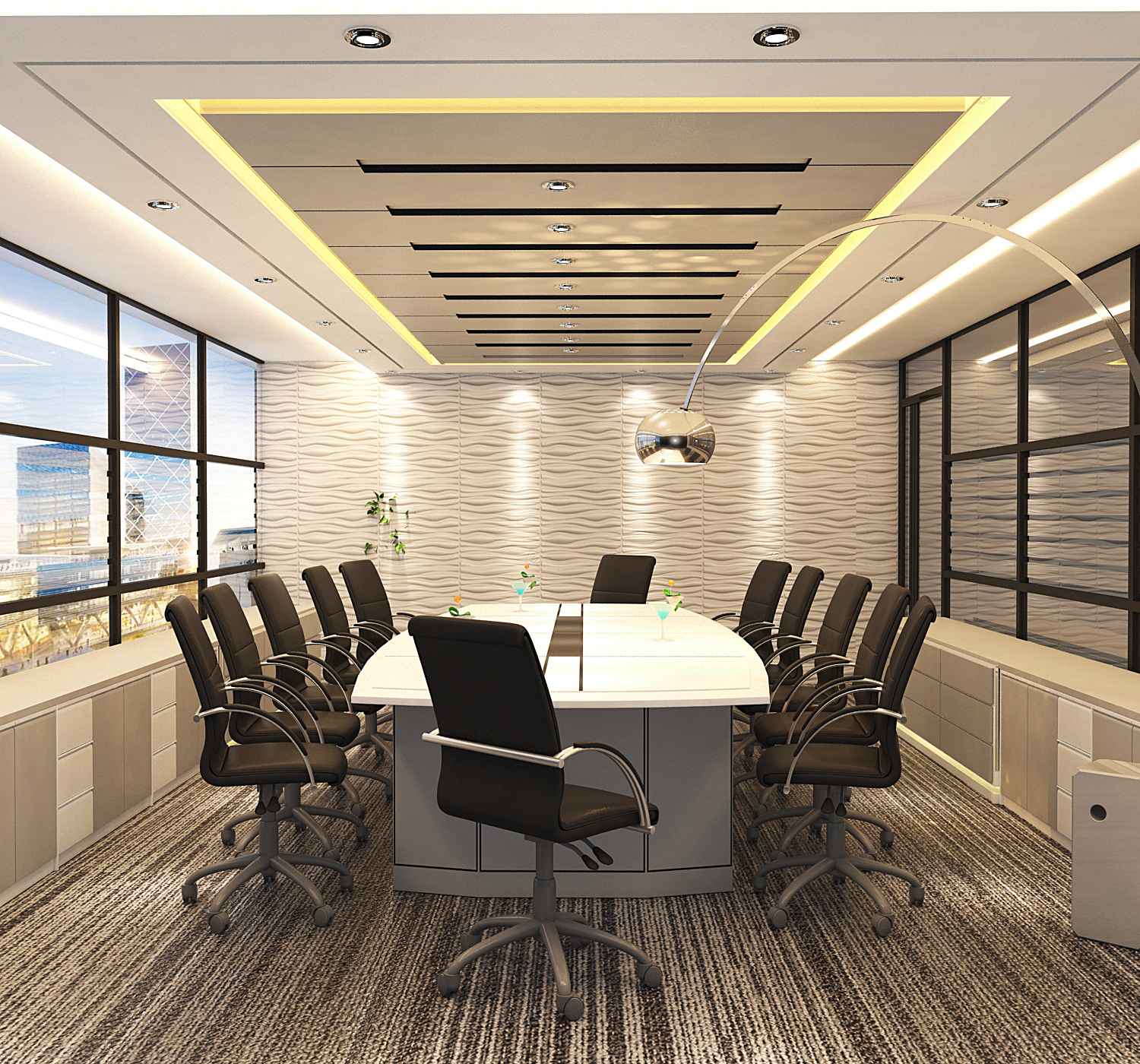
Conference Room Interior Design: Why Acoustic Privacy and Hybrid-Ready Lighting Are Game Changers
Not all conference rooms in Dhaka are created equal. Too many offices focus on fancy chairs or trendy walls, but skip what really matters: sound privacy and camera-ready lighting. If your team can’t discuss sensitive topics without being overheard—or your hybrid meetings look and sound bad on camera—no amount of stylish furniture will fix it. For Dhaka’s open-plan offices, where thin partitions are common, these issues aren’t just annoyances. They’re risks for both privacy and productivity.
Let’s dive into how you can design a conference room that actually works for today’s business needs. We’ll start with solutions you won’t find on most checklists: acoustic privacy and hybrid meeting design. Then, we’ll cover layout, furniture choices, and branding, all optimized for Dhaka’s unique office culture.
Many Dhaka offices have lightweight walls or glass partitions. These look modern but allow sound to leak. This means confidential talks or client negotiations can be overheard by anyone nearby. It’s a major issue—yet it’s often ignored in conference room interior design.
A 2026 study in the Journal of Acoustical Engineering found that speech privacy in offices is a top concern for over 70% of employees in South Asia. In Dhaka, where office buildings often use cost-saving materials, the problem is even greater.
You don’t need to rebuild your entire office. Smart design choices can dramatically improve privacy:
Here’s a look at how different solutions compare in cost and effectiveness for a typical Dhaka office:
| Solution | Sound Reduction (dB) | Approximate Cost (BDT/sqft) | Installation Complexity |
|---|---|---|---|
| Double-Glazed Partition | 35-40 | 2,500–3,500 | Medium |
| Acoustic Panels | 10-15 | 600–1,200 | Low |
| Solid-Core Door | 5-10 | 1,500–2,200 | Low |
| Carpet Tiles | 5-8 | 350–600 | Low |
| Door Seals | 4-6 | 250–400 | Very Low |
Non-obvious tip: Even a single glass wall can be retrofitted with a slim acoustic curtain. This is a fast way to cut noise during sensitive meetings.
Another insight: Place air conditioning units outside the conference room if possible. Indoor ACs can transmit sound through ducts.
Dhaka’s offices are now hosting more virtual meetings. But many rooms are built for in-person use only. The result? Poor video, bad sound, and awkward camera angles that hurt communication with remote colleagues or clients.
Here’s a simple comparison to help you choose between basic and advanced hybrid meeting setups:
| Feature | Basic Setup | Advanced Setup |
|---|---|---|
| Camera | Single webcam | Dual PTZ cameras, eye-level |
| Microphone | Tabletop only | Tabletop + ceiling mics |
| Lighting | Fixed ceiling lights | Dimmable, layered |
| Acoustic Treatment | None | Panels + seals |
Pro tip: Install a small monitor facing the main speaker, just below the primary camera. This helps speakers maintain eye contact with remote attendees.
Insight: Many Dhaka offices forget that window glare can ruin video. If your conference room has windows, add adjustable blinds or shades.
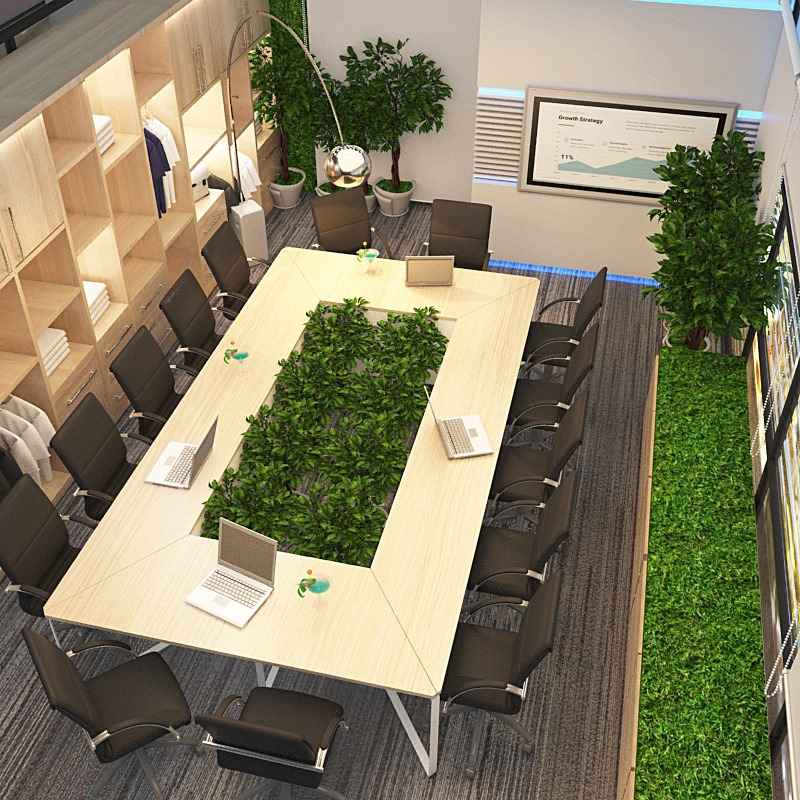
Furniture matters—but only after privacy and hybrid needs are solved. The right layout supports both in-person teamwork and virtual collaboration.
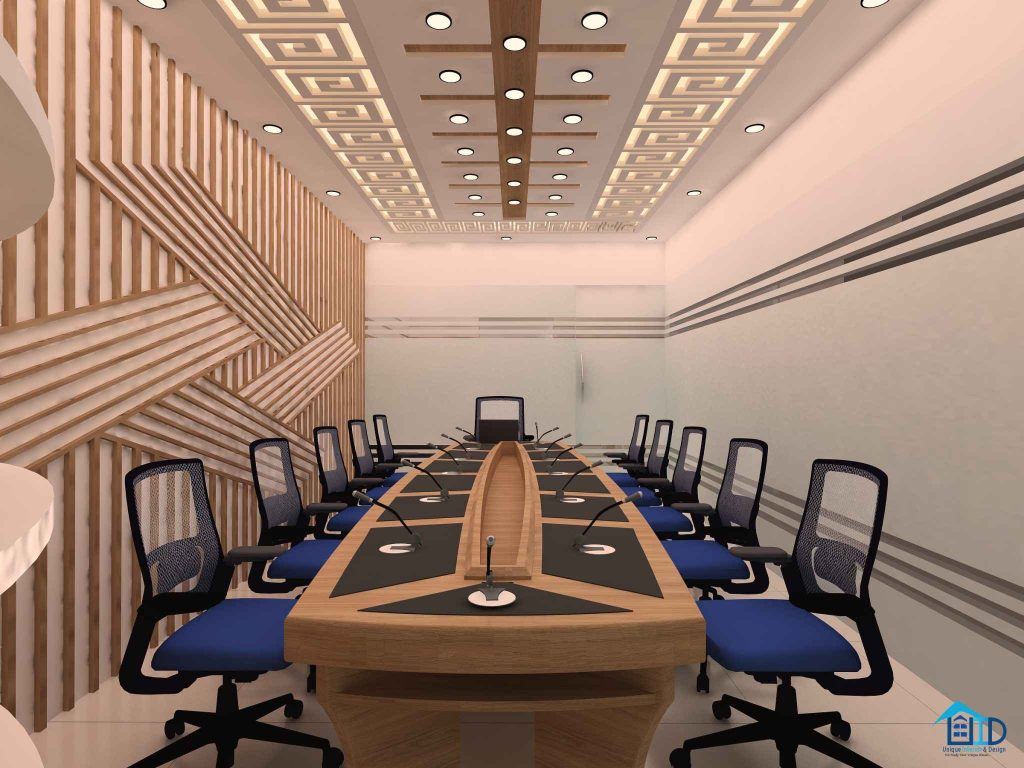
Some conference rooms are used mainly for board meetings or client presentations. Here, a fixed table with built-in power and data ports works best. Fixed setups are also easier to wire for cameras and microphones.
Advantages:
Drawbacks:
Non-obvious advantage: Fixed tables can be designed with built-in acoustic baffles underneath, cutting down on sound reflection.
If your conference room is used for training, workshops, or team huddles, modular tables and stackable chairs are better. They can be rearranged for different group sizes or activities.
Advantages:
Drawbacks:
Pro tip: Choose tables with locking casters and built-in power strips. This keeps things neat while allowing easy movement.
A common mistake is squeezing in as many seats as possible. This often leads to cramped, uncomfortable meetings, especially in Dhaka’s smaller office spaces.
Smart capacity planning:
Here’s a quick reference for conference room sizing:
| Number of People | Recommended Room Size (sqft) | Minimum Table Size (ft) |
|---|---|---|
| 6 | 150 | 3 x 6 |
| 10 | 250 | 4 x 8 |
| 16 | 400 | 4 x 12 |
Important tip: In Dhaka, also plan for air flow and cooling. Overcrowded rooms get stuffy fast, making meetings less productive.
Your conference room is often where clients form their first impression. Branding doesn’t mean covering every wall with your logo. Instead, use color, materials, and small touches to reflect your company’s identity.
Quick ideas:
Non-obvious insight: For hybrid meetings, digital branding matters too. Set up a branded virtual background for video calls, so your company identity is clear even on screen.
For more ideas on office-wide branding, see our Office Interior Design page.
Start with acoustic panels and door seals. These are easy to install and reduce sound leaks quickly. Add a white noise generator outside the room for extra privacy.
Use a mix of soft ceiling lights and adjustable wall washers. Avoid only overhead lights, which cause shadows. Add dimmable controls so you can adjust for video calls.
Plan for at least 25 square feet per person. This ensures comfort and enough room for technology, movement, and air flow.
Place the main camera at eye level and use layered lighting. Test camera angles with actual people in the room. Add blinds to control window glare.
Designing a conference room in Dhaka means thinking beyond style. Acoustic privacy and hybrid-ready technology are now essential. With the right solutions, you get a space that protects sensitive talks, looks professional on camera, and adapts to any meeting—virtual or in-person.
If you want a truly effective space, start with privacy and tech, then layer in comfort, flexibility, and brand identity.
Looking to upgrade your conference room interior design? Our team at Unique Interior & Design combines smart planning with Dhaka-specific solutions. Let’s create a space that’s private, flexible, and ready for the future. Contact us today to get started.

Sarwar Hossain is an interior design professional with 15+ years of experience and the founder of Unique Interior BD, which has completed 350+ interior and fit-out projects across Bangladesh since 2015. He is the Vice President of the Bangladesh Interior Companies Association, a General Member of the Entrepreneurs Club, and winner of the South Asian Business Excellence Awards 2025.