Office Address
Siddique Tower (Level-2), House 45, Road-1, Block-A, Niketan, Dhaka-1212
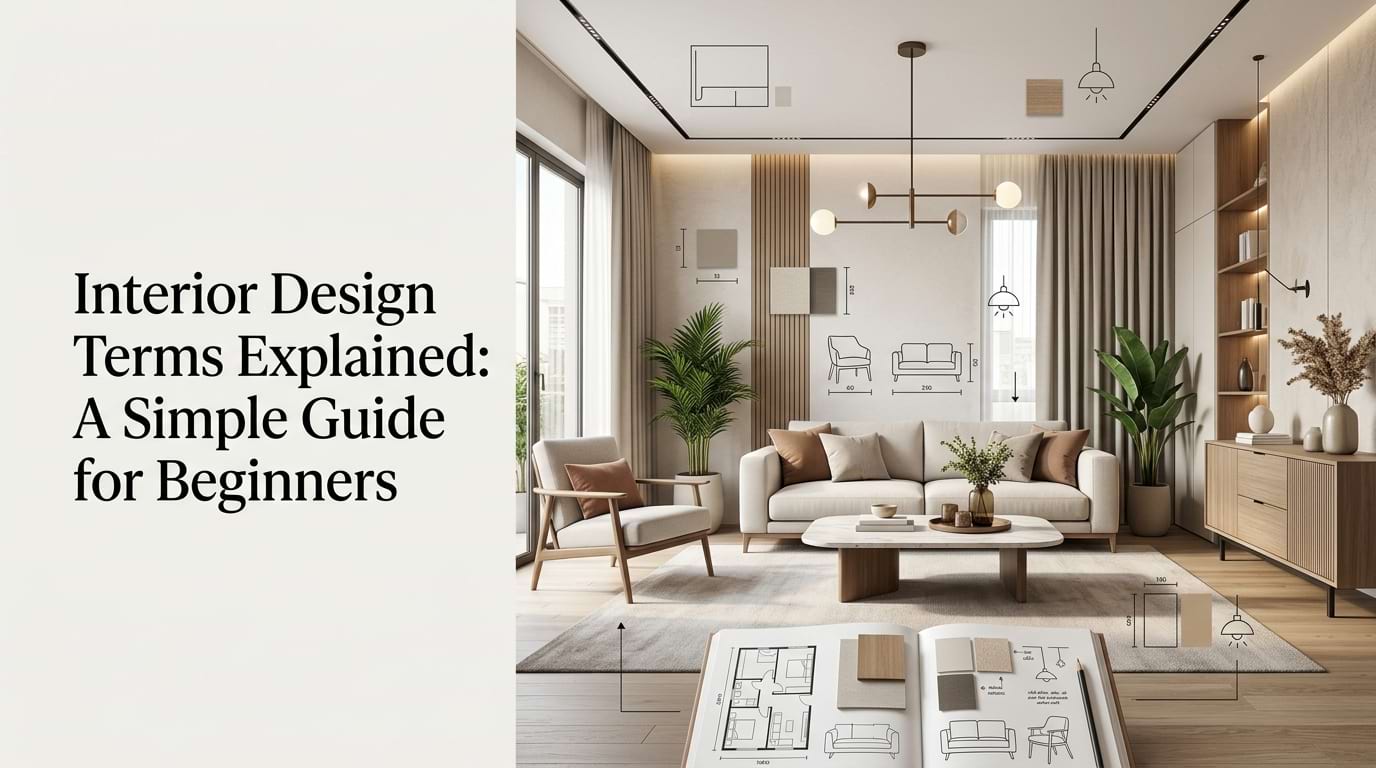
Interior Design Terms Explained: The Essential Glossary for Unique Interior & Design (Dhaka, BD)
If you’re starting an interior design project in Dhaka or across Bangladesh, you’ll quickly meet terms that sound technical or unfamiliar. From international standards to local rules, materials, and design ideas, knowing what each term means can help you avoid confusion—and save money.
This glossary brings together both global and Bangladesh-specific interior design terms, in clear plain English. You’ll find simple definitions, real examples, and links to further reading on Unique Interior & Design’s own posts.
Whether you’re a homeowner, architect, or contractor, use this reference to make better choices and communicate with confidence.
Understanding material terms is essential for making smart choices about quality, budget, and style. Here’s what you need to know about commonly used materials in Bangladesh interior design.
HPL is a strong surface material made by fusing layers of paper with resin under heat and pressure. It’s used for cabinets, countertops, and wall panels. HPL is scratch-resistant, easy to clean, and comes in many colors and patterns. See our full post on
MDF is an engineered wood product made from wood fibers and resin, pressed into sheets. It’s smooth and easy to cut, making it ideal for cabinets, wall paneling, and furniture. MDF is less expensive than solid wood but must be sealed well to avoid water damage.
A veneer is a thin layer of real wood glued onto a less expensive base material (like MDF). Veneers give furniture and panels the look of solid wood at a lower cost. Each sheet has its own unique grain and color.
Laminate is a synthetic material, usually made by bonding layers of paper or plastic. It’s often used for kitchen cabinets, wardrobes, and floors. Laminate is durable and affordable, but doesn’t have the natural feel of real wood or veneer.
Gypsum board (also called plasterboard or drywall) is a lightweight panel used for walls and ceilings. It’s fire-resistant, easy to install, and commonly used for false ceilings and partition walls in Bangladesh. Learn more in
ACP consists of two thin aluminum sheets bonded to a plastic core. It’s lightweight, weatherproof, and used for wall cladding, signage, and sometimes false ceilings in commercial interiors.
Solid surface is a man-made material used for countertops and sinks. It’s non-porous, easy to repair, and can mimic stone or marble. Popular brands include Corian and LG HI-MACS.
An almirah is a freestanding wardrobe or cabinet, widely used in Bangladeshi homes for storing clothes, bedding, and valuables. Almirahs can be made of metal, wood, or MDF.
Navigating interior design in Bangladesh means understanding legal requirements, building codes, and the steps involved in each project. These terms are critical for compliance and transparency.
A BOQ is a detailed document listing every material, item, and service needed for a project, along with exact quantities and costs. It’s a standard tool for construction and interior work, ensuring transparency in pricing and helping clients compare quotes.
At Unique Interior & Design, we use BOQs to support our “100% Transparent Billing” promise. Each BOQ includes:
Itemized materials:
Types and brands of every material.Exact measurements:
Area or number for each item.Labor costs:
Separate from material costs.Project timeline:
Estimated time for each stage.Total cost:
Clear subtotal and grand total.A BOQ helps prevent hidden charges and disputes. Clients can check every line and see where their money goes. More about BOQs in our [detailed billing guide](https://uniqueinterior.com.bd/blog/boq-transparent-billing).
RAJUK is the main urban development authority in Dhaka. It oversees building permits, zoning, and land use. Any major renovation or construction usually requires RAJUK approval. See our [RAJUK compliance checklist](https://uniqueinterior.com.bd/blog/rajuk-approval-process).
DAP is a city planning document for Dhaka, detailing land use, building heights, and road layouts. Interior projects (especially commercial) must follow DAP guidelines to avoid legal issues. More on this in [DAP rules for interiors](https://uniqueinterior.com.bd/blog/dap-interior-design).
BNBC sets the official standards for building safety, fire protection, structure, and services in Bangladesh. All interior and construction projects must follow BNBC rules. Familiarize yourself via our [BNBC basics explained](https://uniqueinterior.com.bd/blog/bnbc-basics).
Plinth level is the height between the ground and the finished floor of a building. It helps protect against flooding, dampness, and pests. The plinth level is set during construction and influences design decisions like stair height and door placement. See [our plinth level recommendations](https://uniqueinterior.com.bd/blog/plinth-level-guide).
ECPS is a document issued by the local utility, confirming legal permission to connect electricity for a new or renovated space. Without ECPS, you cannot get power supply from the grid. Learn more at our [ECPS process breakdown](https://uniqueinterior.com.bd/blog/ecps-electricity-permit).
BICA is the national group representing licensed interior contractors. Hiring a BICA-member firm ensures compliance with industry standards and a certain quality of work. See our [guide to choosing a BICA contractor](https://uniqueinterior.com.bd/blog/bica-certified-interiors).
Interior design is full of concepts that shape how spaces look and feel. These ideas help you make decisions about layout, style, and function.
An accent wall is a single wall in a room that’s painted or decorated differently from the others. It draws attention, adds visual interest, and defines spaces. Accent walls are popular in living rooms and bedrooms. See ideas in our
A false ceiling (or dropped ceiling) is a secondary ceiling suspended below the main ceiling. It hides wiring, lighting fixtures, or air conditioning ducts, and can be shaped for design effects. False ceilings are common in offices, hotels, and modern homes. Details in [false ceiling options for Dhaka]
A modular kitchen is a kitchen made from prefabricated cabinets and units, designed for easy assembly, flexibility, and efficient use of space. Modular kitchens are popular in urban Bangladesh for their modern look and convenience. Explore options in our [modular kitchen design]
The work triangle refers to the ideal distance and arrangement between the stove, sink, and refrigerator in a kitchen. This layout improves efficiency by minimizing walking distance during cooking.
Open plan is a design style where rooms (like kitchen, dining, and living) are combined into one large, open space without dividing walls. This layout makes interiors feel bigger and is popular in modern apartments.
A partition wall is a non-load-bearing wall used to divide spaces within a room. Partition walls can be made of glass, wood, gypsum, or even metal screens, and allow flexible layouts.
Built-in furniture is custom-designed to fit into a specific space, like wall-to-wall wardrobes, bookcases, or window seats. Built-ins maximize space but are permanent.
Soft furnishings include curtains, cushions, rugs, and upholstery—anything made of fabric that adds comfort and color to a room.
A focal point is the main feature in a room that attracts attention, such as a fireplace, artwork, or statement piece of furniture.
Ambient lighting is the main source of light in a room, providing overall illumination. Examples include ceiling lights or LED strips in a false ceiling.
Task lighting is focused light for specific activities, like reading lamps, under-cabinet kitchen lights, or desk lamps.
Ergonomics means designing spaces and furniture to fit human needs for comfort, health, and efficiency.
Knowing about credentials and professional terms helps you choose the right team and understand the process.
(See above; BOQ is both a process/legal and credential term due to its role in professional billing. )
A turnkey project means a complete service—design, materials, construction, and finishing—handled by one firm. The client receives a “ready to use” space. Turnkey is popular for offices and apartments in Dhaka.
Design-build is a project method where one firm handles both design and construction, reducing delays and miscommunication.
A scope of work document lists all tasks, deliverables, and responsibilities in a project. It defines what is included (and what is not) before work starts.
A change order is a written agreement that changes the original design, materials, or schedule—usually with a cost adjustment. It’s common in larger projects.
A site survey is the process of measuring and evaluating the space before design begins. Accurate surveys prevent mistakes later.
An interior designer creates plans for layout, style, and materials. A contractor manages the actual construction and installation. Some firms (like Unique Interior & Design) handle both roles.
To quickly compare similar terms and materials, review the following tables:
|
Material |
Main Use |
Strengths |
Weaknesses |
|---|---|---|---|
|
HPL |
Cabinets, wall panels |
Durable, many colors, easy to clean |
Needs proper edge sealing |
|
MDF |
Furniture, paneling |
Low cost, smooth surface |
Sensitive to moisture |
|
Veneer |
Furniture, panels |
Natural wood look |
Needs careful handling |
|
Laminate |
Cabinets, floors |
Affordable, durable |
Less natural appearance |
|
Legal Term |
What It Controls |
Who Issues |
When Needed |
|---|---|---|---|
|
RAJUK |
Permits, zoning |
Dhaka authority |
Before major works |
|
DAP |
City planning |
RAJUK |
For new buildings |
|
BNBC |
Building safety |
Government |
All construction |
|
ECPS |
Electricity |
Utility company |
Before power hookup |
|
Kitchen Term |
Definition |
Why It Matters |
|---|---|---|
|
Modular kitchen |
Pre-made units assembled onsite |
Faster, flexible, modern |
|
Work triangle |
Distance between stove, sink, fridge |
Improves efficiency |
|
False ceiling |
Secondary ceiling below main |
Hides wiring, adds style |
|
Accent wall |
Decorated wall to create focus |
Adds character to room |
A BOQ (Bill of Quantities) details every material, quantity, and cost in a project. It helps clients understand exactly what they’re paying for and prevents hidden charges. At Unique Interior & Design, the BOQ is key to our transparent billing system.
MDF is a base material made from wood fibers, while HPL is a hard surface layer. HPL is usually applied on top of MDF for better durability and design. MDF is cheaper but can absorb water if not sealed; HPL is more scratch-resistant.

Sarwar Hossain is an interior design professional with 15+ years of experience and the founder of Unique Interior BD, which has completed 350+ interior and fit-out projects across Bangladesh since 2015. He is the Vice President of the Bangladesh Interior Companies Association, a General Member of the Entrepreneurs Club, and winner of the South Asian Business Excellence Awards 2025.

Unique Interior & Design has been Dhaka’s trusted interior fit-out firm since 2015. With 350+ completed residential and commercial projects across Bangladesh, our BICA-affiliated team delivers precision-crafted spaces — on time, within budget, and built to last.
Siddique Tower ( level -2) House -45, Road-1, Block-A, Niketan, Dhaka 1212
Mobile:+8801713-840155
©2026. Unique Interior & Design | All Rights Reserved.